



A shirt can look plain one minute and personal the next. That is the nice part about transfer paper. A small design and a hot iron can turn basic fabric into something made for a team, event, shop project or weekend idea.
Still, the first try can feel risky. One wrong setting and the print may fade, crack or peel at the edges. That is why How To Use Iron On Transfer Paper is still a real beginner question. Makers who want a cleaner finish often look at options from Mad Monkey Transfers when the project matters beyond a quick test.
Know the Paper Before Printing
Transfer paper is not all the same. Light fabric paper usually works differently from dark fabric paper. Some designs need to be mirrored before printing. Some do not. The packet instructions matter more than guesswork.
The printer type matters too. Inkjet paper belongs in an inkjet printer. Laser paper belongs in a laser printer. Mixing paper and printer types can ruin the sheet early.
The fabric also plays a part. Cotton and cotton blend shirts are usually easier for beginners because they handle heat better than many delicate materials.
Print Slowly, Not in a Rush
A rushed print often causes trouble later. The design should be checked before it touches the transfer paper. Size, spelling, color and placement all deserve one final look.
A test print on normal paper can save the good sheet. It shows whether the design sits straight and whether the size feels right on the shirt.
Once the transfer sheet is printed, it needs a short rest. Wet ink is not ready for pressure. A few calm minutes can prevent smudging and uneven color.
Cut With Care
Cutting looks like a small step, but it changes the final look. A rough edge can show on the shirt. Sharp corners can lift sooner during washing.
The cut should follow the design neatly. Rounded edges often sit better than sharp corners.
Beginners learn this fast. A cleaner cut makes the finished shirt look neater.
Set Up the Shirt Properly
The shirt should be clean, dry and flat. Wrinkles trap heat unevenly. Moisture can weaken the bond.
A hard, heat-safe surface works better than a soft ironing board. The pressure needs to reach the transfer evenly. A board with too much padding can make the middle press well while the edges stay weak.
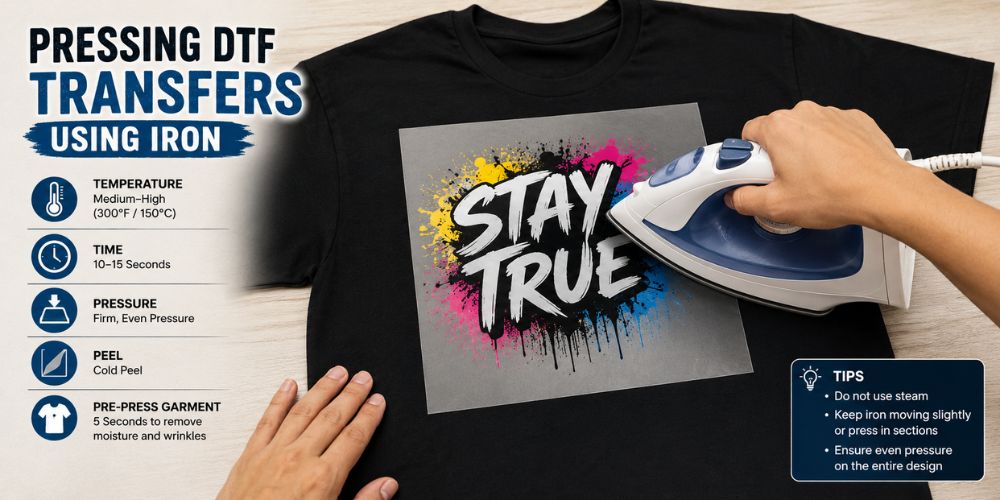
Before placing the design, the fabric should be pressed for a few seconds. This removes light moisture and smooths the surface. Mad Monkey Transfers explains the same habit in its guide on iron application, where fabric prep is treated as part of the result, not a side step.
Press With Steady Pressure
The iron should be hot enough for the paper instructions. Steam should stay off. Steam adds moisture and can disturb the transfer.
The design should sit face down for light fabric paper if the instructions say the image was mirrored. Dark fabric paper may sit differently, which is why the paper guide must be checked first.
Pressure matters as much as heat. The iron should move slowly across the whole design, especially the corners and edges. A quick pass rarely gives the adhesive enough time to grip.
Peeling also depends on the product. Some papers peel hot. Some peel cool. Guessing here can spoil a good print at the final moment.
Wash It Like the Print Matters
The shirt should not be washed straight away. Most transfer products need time to settle after heat.
When it is time to wash, turning the shirt inside out helps protect the print. Cold water is usually kinder to color. Harsh washing, bleach and high heat can shorten the life of the design.
For longer wear, Mad Monkey Transfers shares washing tips that fit printed garments in general.
Conclusion
Iron on transfer paper is great for learning and small projects, but the result depends on careful printing, cutting, heat, pressure and washing. The best shirts usually come from patience, not speed.
For makers who want brighter artwork, cleaner edges and a more professional finish without handling every print step alone, Custom DTF Transfers can be a stronger option for personal shirts, team wear, brand merch and repeat orders.