


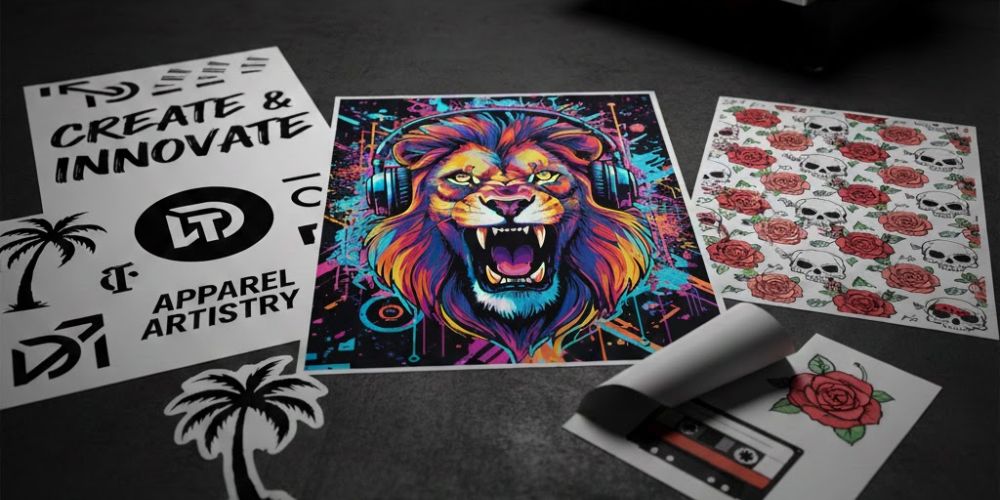
DTF is for soft fabrics using heat and hot-melt powder, while UV DTF is for hard, non-porous surfaces using UV-cured inks and pressure-sensitive adhesive.
Step-by-Step: How DTF Works
Step 1 – Print your Design on PET Film (DTF)
- You start with a special PET film and a DTF printer.
- The printer lays down CMYK colors first, then a white ink layer to make the design opaque.
- The DTF inks are water-based pigments made for textiles, so they stay flexible after transfer.
Why It Matters to You:
You can print full-color, detailed designs (including on dark shirts) and keep them ready as transfers for later jobs.
Step 2 – Apply and Cure Hot Melt Adhesive Powder
While the ink is still tacky, you coat the printed areas with fine TPU hot-melt DTF powder and shake off the excess, then you cure the powder on the film.
Typical cure range for the powder is about 250–270°F (120–132°C) for 2–3 minutes in a curing oven, or around 320–356°F (160–180°C) for 60–90 seconds, depending on your setup and powder.
Why It Matters to You:
Good curing is what gives DTF its strength. If the powder isn’t melted evenly, you’ll see poor adhesion or premature cracking in the wash.
Step 3 – Heat Press The Transfer onto Fabric
You place the cured film on your garment and use a heat press.
Common Settings:
- Temperature: usually 300–320°F (149–160°C) for most blends, sometimes up to 320–350°F (160–180°C) for 100% cotton. Learn more about how to apply heat press through our guide.
- Time: about 10–15 seconds.
- Pressure: medium to firm, enough to fully seat the adhesive into the fibers.
Why It Matters to You:
This step bonds the adhesive to the fabric fibers, creating a print that can usually withstand 50–100 wash cycles if you use quality materials and proper settings.
Step 4 – Peel The Film And (Optionally) Repress
After pressing, you peel the PET carrier film (hot, warm, or cold, depending on the film).
Many shops then do a second quick press with parchment or a finishing sheet for 5–10 seconds to smooth the surface and lock in the edges.
Final Outcome:
You get a soft, flexible, breathable print that moves with the fabric and works on cotton, polyester, blends, nylon, and more, ideal for apparel.
Step-by-Step: How UV DTF Works
Step A – UV-print on PET “A film”
- UV DTF uses a UV printer and UV-curable inks.
- You print the design on a transparent PET A film in layers (often CMYK + white + a clear varnish).
- As the ink is printed, it is instantly cured with UV LED lamps, forming a hard, raised ink layer.
What You Can Expect:
The print comes off the printer already dry, with very sharp detail, high gloss options, and strong color vibrancy.
Step B – Add/laminate adhesive (B film)
There are two common approaches:
AB Film System
The printed A film is laminated with a B film that carries a pressure-sensitive adhesive layer.
UV light may be used again to stabilize the sandwich.
Liquid/powder Adhesive System
A special UV DTF adhesive (liquid or powder) is applied to the back of the print and cured again with UV light, forming a sticky layer.
Why It Matters to You:
Instead of hot-melt powder that needs heat and fabric fibers, A custom UV DTF transfer creates a pressure-sensitive sticker-like layer that bonds to smooth, hard surfaces.
Step C – Cut and Prepare The Decals
- After printing and lamination, you cut the designs into singles or gang sheets.
- You may trim close to the artwork so the clear edge is minimal.
Why It Matters For You:
You can hand your customer ready-to-apply peel-and-stick decals without a heat press. This is ideal if you sell ready-made stickers online.
Step D – Peel and Apply To Hard Surfaces
To use a UV DTF decal, you:
- Peel off the A film, lifting the ink + adhesive stack.
- Position it on a smooth surface, common choices are tumblers, mugs, jars, phone cases, laptops, glass, metal, plastic, wood, and packaging.
- Press and squeegee out air.
- Remove the carrier, leaving the design behind.
Final Outcome:
You get a waterproof, scratch-resistant, fade-resistant decal that grips non-porous surfaces very strongly and doesn’t need a heat press or oven.
DTF vs UV DTF – Key Practical Differences for You
Main Use
DTF: Soft textiles (t-shirts, hoodies, sportswear, workwear).
UV DTF: Hard, smooth surfaces (drinkware, gadgets, packaging, signs).
Curing & Application
DTF: Cures with heat (250–350°F depending on stage), then needs a heat press to bond to fabric.
UV DTF: Cures with UV light, then uses peel-and-stick pressure, no press or oven.
Durability Type
DTF: Designed for repeated washing, typically 50–100+ wash cycles with proper care.
UV DTF: Designed for waterproof, scratch-resistant, chemical-resistant decals on objects that are handled often and sometimes hand-washed or wiped.
Feel & Finish
DTF: Soft, flexible, and thin, comfortable on clothing.
UV DTF: Slightly raised, with a glossy, sticker-like feel, great for branding and labels.
When Should You Use Each?
Choose DTF when you want wearable prints on fabric that can go through a washing machine many times.
Choose UV DTF when you want premium, durable decals for hard, non-porous products like branded cups, jars, electronics, or product packaging.