



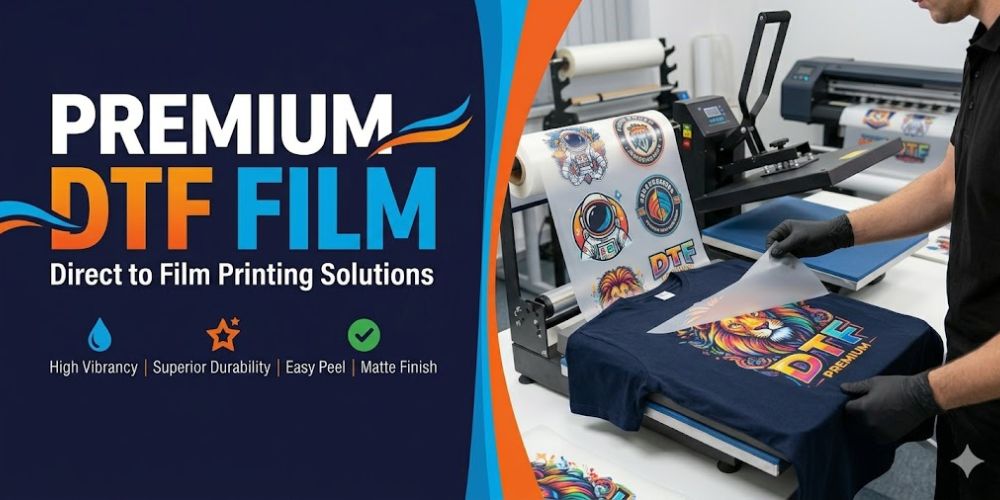
The term DTF printing may sound familiar to anyone who has ever wished to create their own unique clothing or accessories. This method makes printing designs on high-quality fabric a breeze. But you might be wondering how a novice can make a DTF transfer film that looks like it was shot by a pro. That will be taken care of.
Through Mad Monkey Transfers, they get to operate such procedures on an expert level for their customers daily. Now, the results you get from following this straightforward method are guaranteed to be top-notch. This is a brilliant plan. What is the first step, then?
To Use Your DTF Transfer Film
Use the same technique you would with a canvas painting to apply DTF transfer film. During the printing process, a particular film contains the ink. A clean and long-lasting print is produced by pressing ink onto fabric. How does this quality stack up? Which one stands out the most? Use it with any color of fabric, even darker ones such as cotton, polyester, or otherwise. I assure you, the prints aren't garish.
Instantly Give Anything a Personal Touch
Make sure you have a printer available that is capable of handling DTF files. The use of DTF ink allows for the printing of designs onto transfer film. Ensure that you only buy high-quality ink when you go shopping. Using high-quality ink for printing ensures that your print will endure numerous washes and general wear and tear, in addition to producing vivid colors.
The following step after printing is to apply adhesive powder. Fabric printing is now a piece of cake. Applying the powder is the first step, and heating it is the second. For their application, the fabric and powdered ink must be melted and bonded at high temperatures.
Take Another Look at the Film
One must "cure" transparency film using a heat press or a conveyor dryer prior to handling it. Have trust that the adhesive powder will cling to the print like glue.
Now, printing requires the ideal heat levels, but you must remember to be vary to not apply a lot less than it needs or it'll just damage the print.
Traditional Methods for Making Clothes
Do something you'll really enjoy doing and step out of your comfort zone. Before pressing the film, make sure the fabric is in the correct position. In order to transfer ink from film to fabric, heat and pressure are used in the printing process. Printing with complete transparency requires precise regulation of both temperature and pressure.
After pressing, please let it cool down for a bit. After that, carefully peel off the transfer film. If the fabric now perfectly replicates your design, that would be perfect. A multicolored, shiny, and silky finish is ideal.
DTF Transfer Film Is A Great Option
For the time being, DTF seems to be the optimal printing option, but you may be asking why. There are a lot of reasons why this is the greatest choice for customized apparel:
The use of vivid, eye-catching colors makes DTF prints nearly impossible to miss. No matter if it's a graphic tee or a customized sweatshirt, people will notice your design.
Due to its adaptability, DTF has several potential material applications. Compared to other methods, this one works wonders on dark fabrics.
Prints made using digital-to-film transfer have a long lifespan. Finding fabric compositions that retain their shape after multiple washes and do not pill, fray, or lose their form is essential for garment construction that lasts.
Keep Away From These Common Mistakes
An undesired transfer could result from insufficient heat control. When you use heat, your design has the potential to burn or peel off. The times and temperatures given should be carefully considered.
If you want a really strong bond, but you use too much adhesive powder, your printout will be too stiff. Inspect the area to make sure the powder is evenly distributed. Any amount is greatly appreciated.
If you value durability, invest in premium ink. Using cheap ink for printing causes the final product to be unappealing and fuzzy, and the colors and details to fade prematurely. Designs will look terrible if you use cheap DTF inks.
Conclusion
As you get to know how this procedure works, simplistically, when it was all complex for some, it just makes it more worthwhile. Now, if you require some of our DTF Film, then you can go to Mad Monkey Transfers, as we’ll provide you with the resources.