



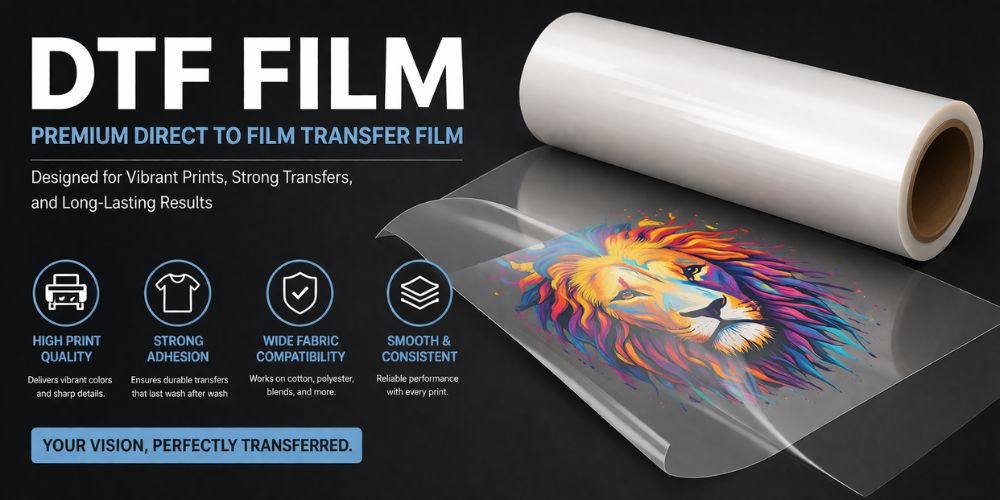
If you're like the majority of people, you're probably wondering if it's possible to sublimate on Direct to Film Printing. This is a common and understandable concern among those involved with personalized printing. It is my suggestion that we investigate this further.
Our customers often stumble into awe when they ask for our products. In fact, Mad Monkey Transfers is no stranger to the matter. Here, we will give you a simple but straightforward guideline.
What is DTF Printing?
Before we get into the meat of the matter, let's define DTF. Direct to Film printing is a simple process that entails heating a specific film that bears your design till it transfers to fabric. Being compatible with a wide variety of materials, including cotton, polyester, mixes and even dark fabrics. It is a favorite among bespoke printers. That is why it is so useful for those who wish to print on various materials; it is quite adaptable.
Is sublimation, however, the same? Absolutely not. We can examine it.
How is DTF Different From Sublimation?
The process of sublimation is as follows: the ink is turned into a gas, which forms a connection with the fabric fibers. This method can only be used on polyester and a few other fabrics coated with polymers since the ink is effectively fused into the cloth. Using high-quality cloth makes it stand out, be recognizable and last a long time.
Contrarily, DTF uses inkjet printing on film to transfer the image onto fabric. It can't create as strong of a connection with fibers as sublimation can. Its surface-level application means it may be used on a larger variety of textiles than sublimation. This includes cotton, mixes and even dark materials.
Would DTF Film Work for Sublimation?
You can't use direct sublimation on DTF film, plain and simple. Unfortunately, DTF does not include the specific bonding method needed for sublimation. In order for sublimation to work, the inks must first transform into a gas, which is something that DTF forbids.
There is a catch when using sublimation ink with DTF film. Still, it won't work the same way as standard sublimation. Unlike sublimation ink, which bonds with polyester, DTF film does not. As a result, sublimation yields superior results when treated directly with DTF.
Justifications for DTF's Continued Success
Sublimation may not be the optimal method for DTF, but that doesn't diminish its remarkableness. Due to its many advantages, DTF is a formidable rival in the printing industry.
A wide variety of materials, including cotton, mixes, dark fabrics and more, may be handled by DTF, in contrast to sublimation's exclusive handling of polyester. You may now personalize t-shirts and sweatshirts with a myriad of additional possibilities.
Direct to Fabric printing is inexpensive compared to other printing technologies, particularly for smaller runs, because the initial investment is reduced. In the beginning or when you aren't planning to perform big runs, DTF is a cheap option to consider.
Exceptional DTF prints are bright, clear and durable. The garment's color and pattern will stay true even after several washes thanks to the high-quality transfer.
A Brief Synopsis of DTF's Roles
If you're interested in giving DTF printing a go, I can assure you that it will be worthwhile:
Direct thermal printers allow you to print patterns onto transfer film. Your DTF printer will work at its best with the correct ink.
Apply the adhesive powder immediately; this is a crucial step. For the transfer to go well, it's necessary to sprinkle a certain powder onto the damp printed film so it sticks to the fabric.
Before ironing the film onto your clothes, heat it to cure the adhesive powder.
Finally, use a heat press to apply the film to the cloth. The last step is to print the design onto the cloth. Your task is over when it happens!
By understanding the basics, the procedure becomes straightforward and produces great results.
DTF Stands Out When Making Custom Prints
When running a small business, DTF printing allows you to provide a wide variety of materials and colors for personalized apparel. If you own a personalized business or a print shop, DTF can assist you in expanding your product line and attracting more customers. With DTF, you may print on any material, unlike sublimation's polyester limitations, providing your clients more alternatives.
Conclusion
Even if DTF film isn't sublimated, its incredibleness is still intact. Actually, DTF provides flexibility that sublimation simply cannot match. It's affordable, versatile and produces prints that are stunning and vibrant, exactly what your clients are looking for, on a wide range of fabrics. You can take your bespoke garment firm to new heights with DTF Film Roll, whether you're creating hoodies, shirts or accessories.
For high-quality DTF transfer film, go no farther than Mad Monkey Transfers.